


header-logo_1600x.jpg_v=1619459653 1
Nvidia logo

October 2026 Webinar: Opportunities and Challenges with Running HPC Data Centers at the Edge

Why We Hosted This Session

As AI moves closer to the point where data is generated, organizations are increasingly looking for ways to capture, process, and act on sensor data at the edge. For applications where latency, reliability, and real-time AI decision-making matter, the underlying compute platform can be just as important as the AI itself.

Hosted by OSS Director of Sales Jaan Mannik, this session delved into opportunities and challenges pertaining to power, thermal management, reliability, scalability, and deployment constraints at the edge. The discussion highlighted how OSS Servers and PCIe Expansion solutions, combined with NVIDIA technology, help enable high-performance compute in environments where conventional data center infrastructure isn’t practical.
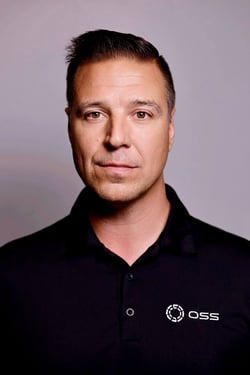

About Our Speaker

unnamed (4)

Jaan Mannik - jmannik@onestopsystems.com

Jaan Mannik is a seasoned sales leader with over 15 years of experience in rugged HPC systems leveraging PCIe switch fabric architecture and product development. As Director of Sales at One Stop Systems, he helps customers deploy rugged, AI-capable, enteprise-class, computing and storage solutions at the edge and specializes in designing GPU-accelerated platforms for demanding applications such as defense, autonomous vehicles, and industrial AI.

Key Topics & Discussion Points

  • [~01:30 – 03:30] AI Workloads Forcing Data Center Redesign: Discussion on why centralized traditional facilities are hitting physical capacity limits. High-end accelerators (like NVIDIA enterprise GPUs) pulling 800W–1,000W+ create massive grid, cooling, and high-performance networking bottlenecks.
  • [~03:30 – 05:00] Data Sovereignty & Geographic Location Shifts: AI model localization and national compliance concerns mandate processing data near the point of capture rather than routing sensitive information to centralized U.S. or overseas hubs; power density has jumped from 10–15 kW/rack to 100–300 kW/rack.
  • [~05:00 – 07:00] Hostile Edge Environments & Physical Hardening: Deploying HPC in non-traditional environments requires surviving severe shock, vibration, airborne contaminants, and thermal extremes through hermetic sealing, front-facing I/O, flange mounting, and GPU hold-down brackets.
  • [~07:00 – 09:30] Advanced Liquid Cooling Architectures: Breaking through thermodynamic barriers where forced air fails by implementing closed-loop direct-to-chip liquid cooling, immersion cooling, conduction cooling, and environmental passive cooling.
  • [~09:30 – 11:30] Flexible Edge Power Subsystems: Addressing the reality that edge deployments lack clean, stable 240V AC power; edge architectures must natively support wide input ranges (down to 12V/24V DC up to 240V AC) while remaining redundant, hot-swappable, and load-sharing.
  • [~11:30 – 14:00] PCIe Switched Fabrics & Low-Latency Interconnects: Leveraging OSS’s core competency in PCIe (Gen 5/6 toward Gen 7), CXL, and NVLink to deliver uncompromised data-center throughput and peer-to-peer GPU acceleration directly at the edge.
  • [~14:00 – 16:30] Behind-the-Meter Power & Off-Grid Deployment (Panthalassa Example): Examining the deployment of modular pods and Neoclouds powered by alternative/renewable energy closer to natural resources, highlighted by partner Panthalassa operating a ruggedized OSS compute rack inside an ocean buoy powered and cooled by deep-sea currents.
  • [~16:30 – 19:30] Scalable Architecture & Composable Scale-Up/Scale-Out: Utilizing PCIe expansion boxes and top-of-rack switches paired with ecosystem software for dynamic memory pooling, allowing operators to grow GPU count attached to a single root complex without over-provisioning unused CPU/memory.
  • [~19:30 – 22:30] Disaggregated AI Hardware & Workload Tailoring: Decoupling compute, storage, and accelerator fabrics so edge systems can be modularly sized for inference versus high-power training, avoiding the rigid CapEx waste of legacy hyperconverged servers.
  • [~22:30 – 27:00] Signal Integrity & Power Delivery Under Harsh Conditions (Q&A): Addressing connector stress and optical signal integrity under heavy vibration via retimers and clean clock architectures, alongside custom power supply backplanes (CRPS) and UBMC telemetry to prevent GPU throttling and bus drops.
  • [~27:00 – End] Maritime Hardening & Commercial ROI via Prefabrication (Q&A): Explaining internal PCBA/GPU conformal coating against salt air corrosion, as well as accelerating time-to-ROI by fully pre-cabling and integrating turnkey modular pods in the factory while field sites are prepared.

Lorem ipsum dolor sit amet
consectetur adipiscing

Lorem ipsum dolor sit amet, consectetur adipiscing elit. In vel nisl elit. Proin non sollicitudin. Consectetur adipiscing elit. In vel nisl elit. Proin non sollicitudin. Consectetur adipiscing elit. In vel nisl elit. Proin non sollicitudin. Proin non sollicitudin.

img